.png&w=256&q=75)
Surviving the Viral Hit: Why We Build on Serverless Architecture
By Ahmed Elsayed on January 27, 2026
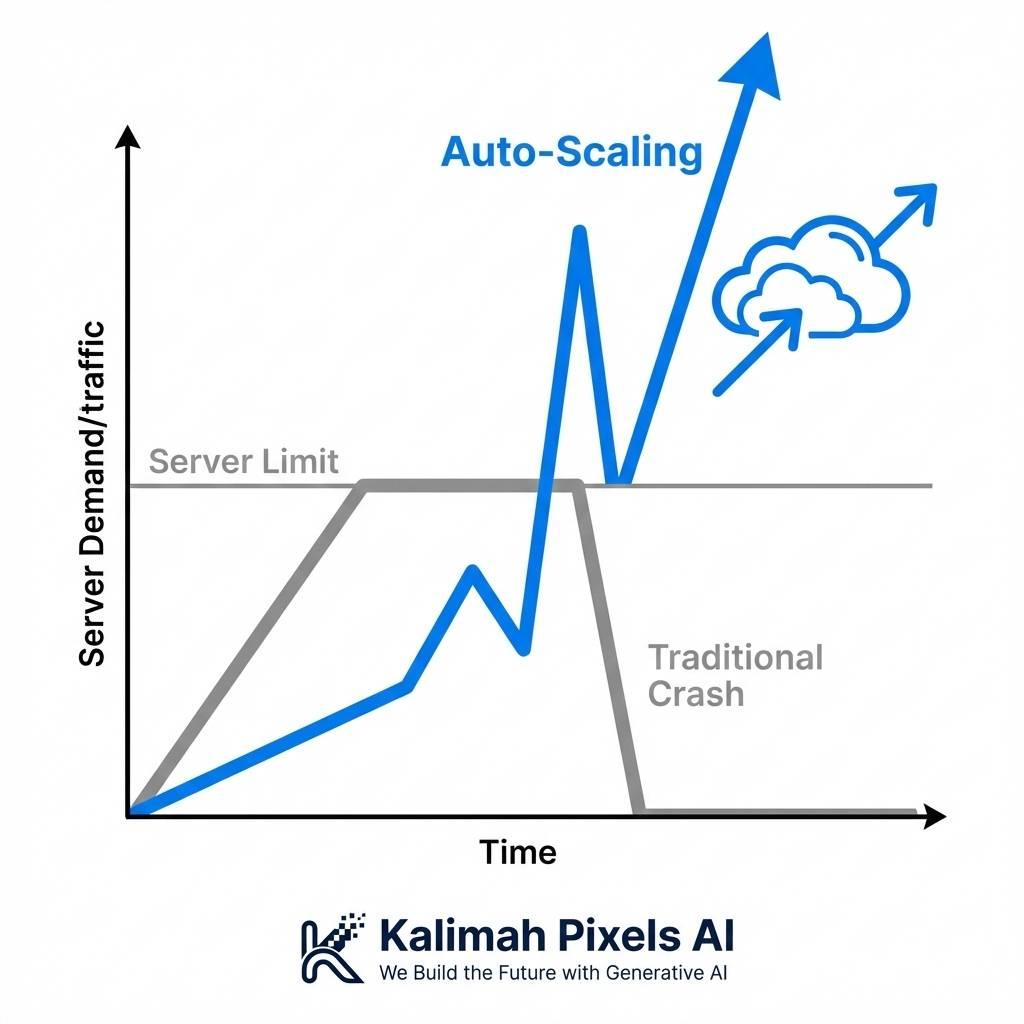
Surviving the Viral Hit: Why We Build on Serverless Architecture
In the startup world, there are two types of failure:
- Failure because nobody wants the product.
- Failure because TOO MANY people want the product, and the system crashes.
The second type is the most painful. Winning at marketing but failing at engineering. At Kalimah Pixels AI, we ensure this never happens to you by adopting Serverless architecture.
What is Serverless?
Traditionally, you had to rent a physical or virtual server with fixed specs. If traffic exceeded the server's capacity, your app would crash. Serverless means you don't manage servers. The cloud provider (like Supabase or AWS) allocates resources to you "on demand."
The Advantages for Your Startup:
1. Auto-Scaling (The Magic Elasticity)
Imagine your app is a restaurant. Traditional hosting is like having exactly 10 tables. If the 11th customer arrives, they get kicked out. Serverless is like a restaurant that magically expands its walls and adds tables the moment customers walk in, whether it's 10 people or 1,000. Your users will never see an "Error 500" page.
2. Smart Cost Efficiency
Why pay rent for a stadium when you are just playing chess? With traditional servers, you pay a high fixed cost even if nobody visits your app. With our Serverless stack, you pay only for the compute you use.
- No users = Near-zero bill.
- Million users = Bill scales with your revenue.
3. Focus on Product
Instead of hiring a DevOps engineer to monitor servers all night, you can invest that budget into building better features for your users.
The Bottom Line: Don't build an app that crumbles under the weight of its own success. Build a foundation that scales with you from Day 1.