.png&w=256&q=75)
The "Bus Factor": Is Your Startup One Person Away from Disaster?
By Ahmed Elsayed on January 27, 2026
The "Bus Factor": Is Your Startup One Person Away from Disaster?
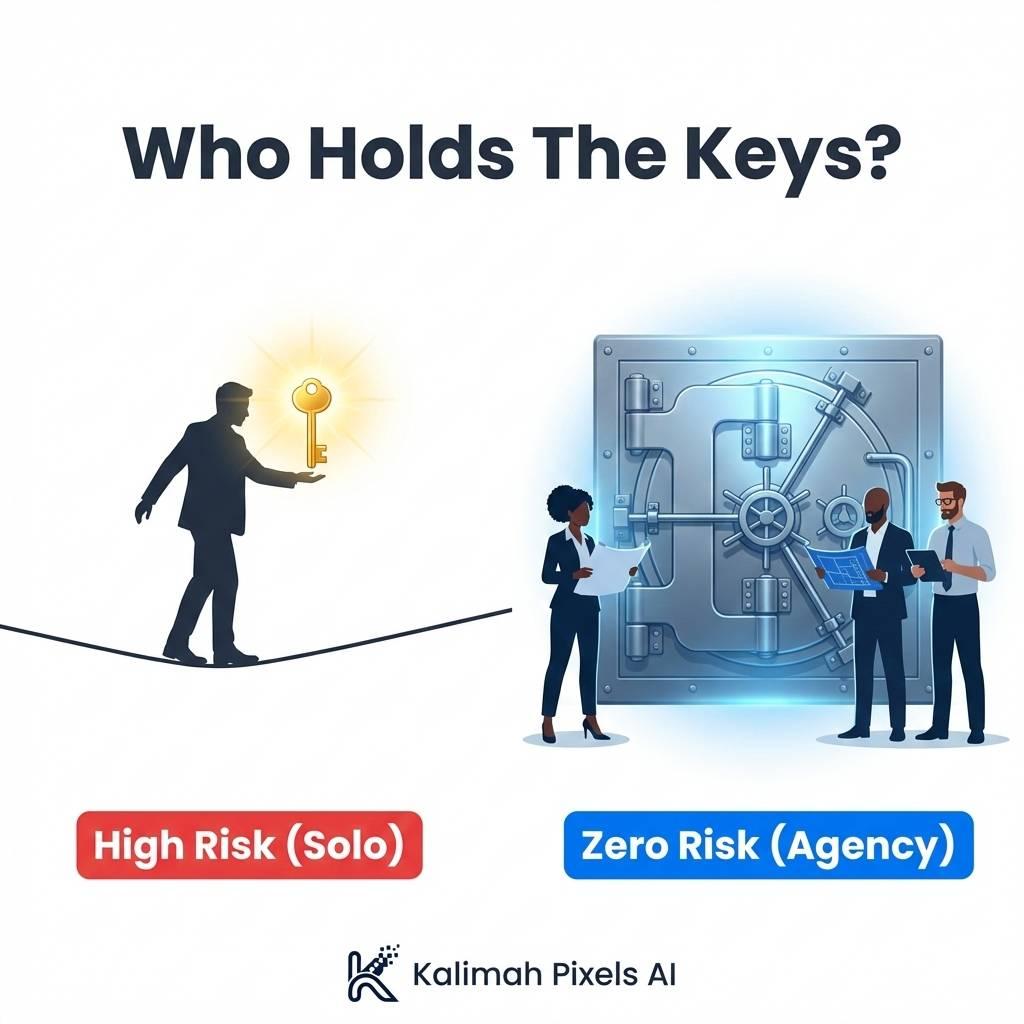
In the software world, we talk a lot about bugs and hacks, but we often forget the biggest human risk. Imagine this scenario: The solo developer who built your app decides to backpack across Europe, gets hired by Google, or (God forbid) gets hit by a bus. Suddenly, nobody knows the database password. Nobody knows how to deploy the new update. Your business freezes.
This metric is called the "Bus Factor." If the disappearance of one person can stop the company, your Bus Factor is 1. This is a terrifying position for you and your investors.
How Do Startups Fall Into This Trap?
This usually happens when a founder hires a "Solo Freelancer" to save costs. Freelancers rarely write Documentation because they keep all the logic in their heads. They are the only ones who understand the "Secret Sauce." This makes you a hostage.
The Solution: Institutional Knowledge vs. Tribal Knowledge
At Kalimah Pixels AI, we engineer our development process to ensure a high Bus Factor (meaning the absence of any individual changes nothing).
1. Documentation as Code
We don't consider a task "Done" until it is documented. We write detailed README files that explain:
- How to run the app from scratch.
- The database schema structure.
- How to deploy updates.
2. Standardized Code
We don't write "puzzles." We use Clean Architecture standards in Flutter. This means if you take our code and hand it to any other professional developer in the world, they will understand it immediately and can continue working.
3. Centralized Ownership
You don't beg us for access; you own it. The GitHub Repository is in your name. The Supabase servers are on your account. We are just the operators of the system you own.
The Bottom Line: Coding isn't magic possessed by one wizard. It is engineering that must be documented and transferable. Don't let your project rely on one person's memory.