.png&w=256&q=75)
The Curse of Over-Engineering: Why Complex Systems Fail
By Ahmed Elsayed on January 27, 2026
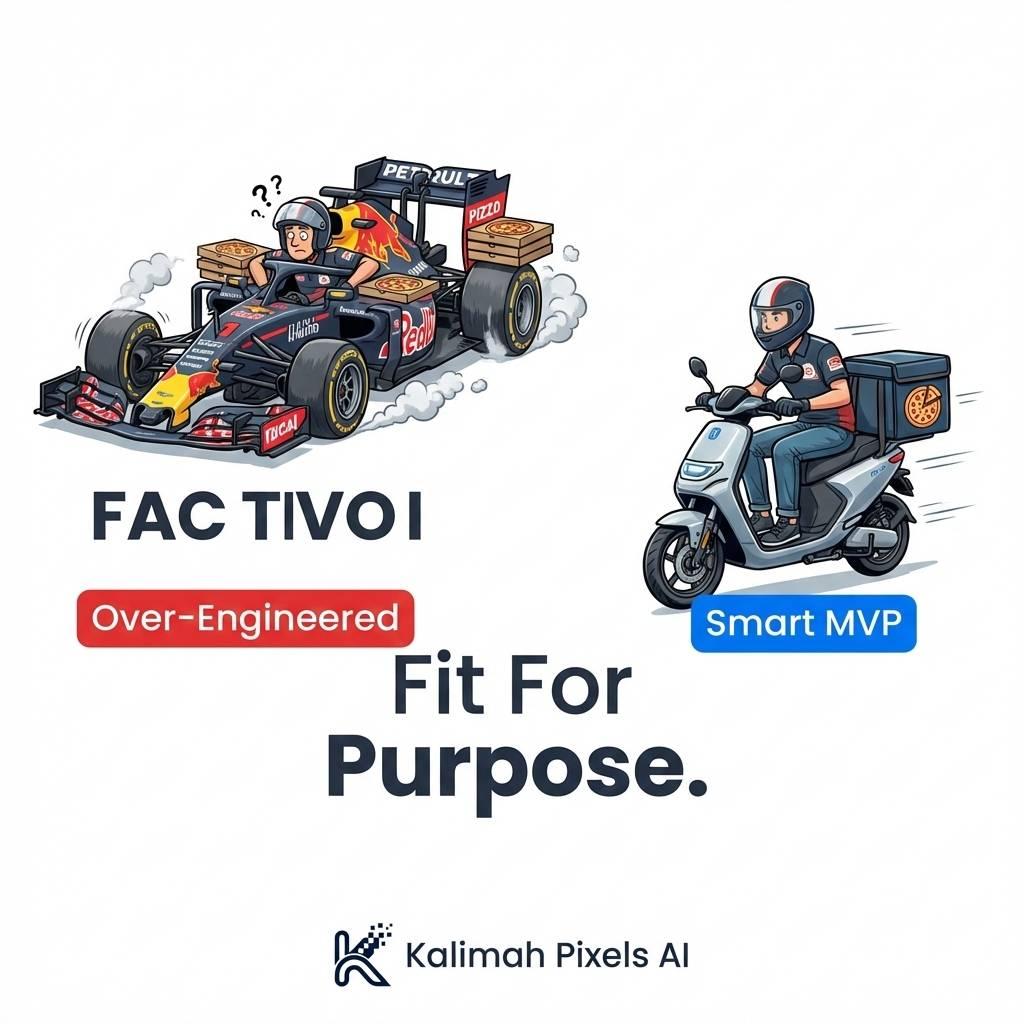
The Curse of Over-Engineering: Why Complex Systems Fail
In the coding world, developers love challenges. If given the choice, they will often choose to build the most complex, sophisticated system possible. They will talk to you about "Microservices," "Kubernetes," and "Event-Driven Architecture."
These terms are great for companies like Netflix or Uber. But for a seed-stage startup? These terms can be a death sentence.
What is Over-Engineering?
It is designing a massively complex technical solution for a simple problem. It's like buying an 18-wheeler truck just to go buy milk from the grocery store.
Why is it Dangerous?
1. High Cost, Zero ROI
Building a complex system takes 3x longer. That means you are burning cash on salaries for months before you generate a single dollar of revenue.
2. Difficulty to Pivot
Startups need to change direction fast based on market feedback. Complex systems are rigid. If you realize your idea needs a tweak, you might have to tear down the entire complex architecture.
3. More Bugs
The more moving parts a system has, the higher the probability that something will break. Simplicity equals stability.
The Kalimah Pixels AI Approach: "Monolith First"
We follow a golden rule in software engineering: Start with a Monolith, break it down later.
- Phase 1 (MVP): We build the app as a single, cohesive unit using Supabase and Flutter. This ensures maximum development speed.
- Phase 2 (Growth): When you hit 100,000 users, then we start decoupling heavy parts and optimizing them.
The Bottom Line: Your user doesn't care how complex your code is. They only care: "Does it work?" Keep it simple. Move fast.