.png&w=256&q=75)
The Vendor Lock-in Trap: Why We Build on Open Standards (Supabase & Flutter)
By Ahmed Elsayed on January 27, 2026
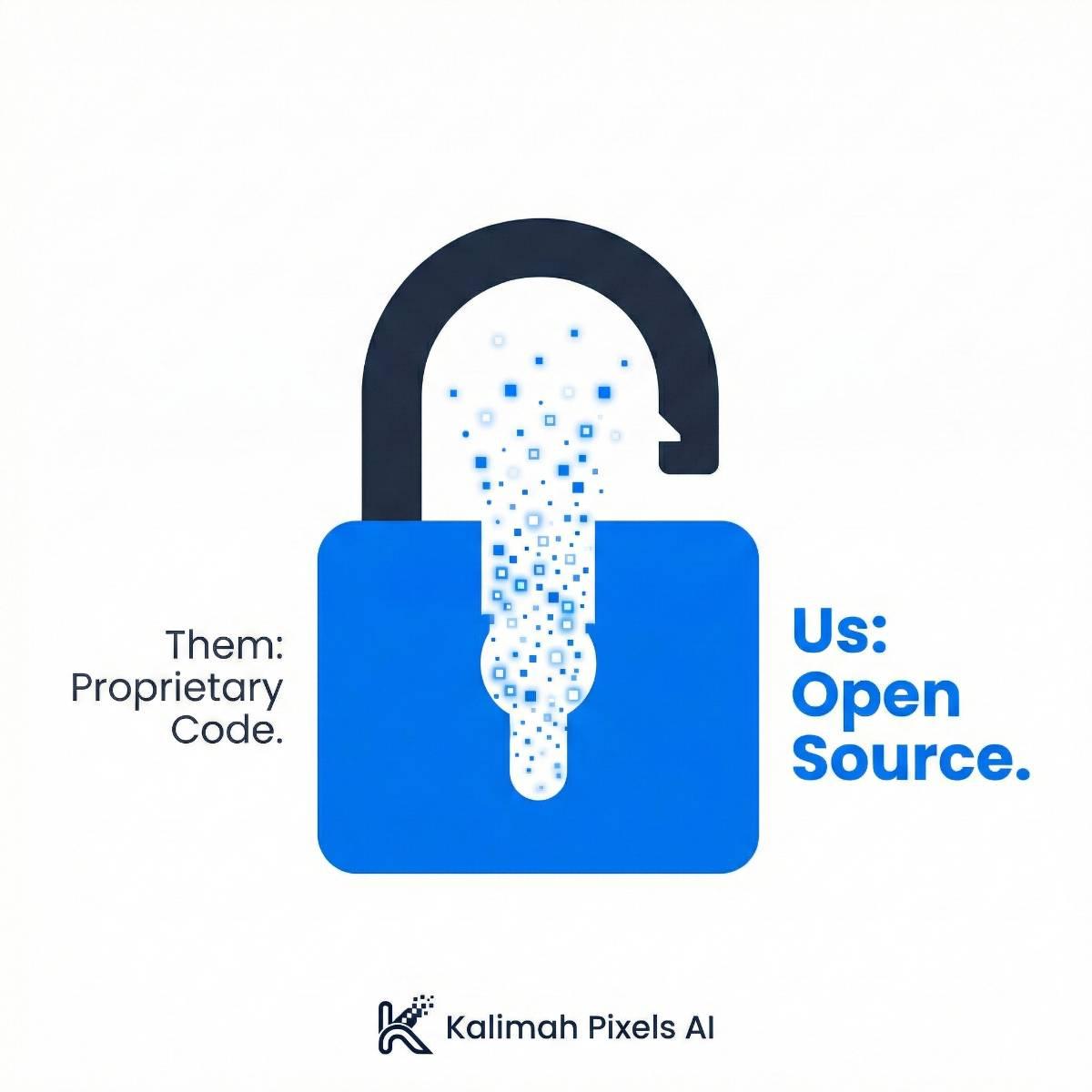
The Vendor Lock-in Trap: Why We Build on Open Standards
Imagine renting a house, and when you decide to move out, the landlord tells you: "You can leave, but the furniture, the walls, and even your clothes must stay here." This is exactly what happens when you build your app on closed platforms or with agencies that hoard the code.
What is Vendor Lock-in?
It is a situation where a startup becomes dependent on a vendor for products and services, unable to switch to another vendor without substantial switching costs or technical incompatibility.
The Real Risks:
- Price Hikes: The vendor knows you can't leave, so they increase hosting or maintenance fees without fear.
- Stagnation: If the platform stops updating its features, your app stops evolving.
- Bankruptcy Risk: If the vendor goes out of business, your app could disappear overnight.
The "Freedom Strategy" at Kalimah Pixels AI
We build our relationship with you on trust, not handcuffs. That is why we choose our Tech Stack very carefully:
1. Supabase instead of Firebase
While Firebase (by Google) is excellent, it is a proprietary "walled garden." We use Supabase, an Open Source alternative.
- The Advantage: The underlying database is PostgreSQL (Standard SQL). This means you can export your data and host it on any server in the world (AWS, Azure, DigitalOcean) at any time.
2. Flutter instead of No-Code Platforms
No-Code platforms are great for prototypes, but they become a prison at scale. Flutter code is real code. You can hire any developer team in the world to take over the project without needing our permission.
The Bottom Line: You pay us to build assets for your company, not to rent technology. Always make sure you hold the "Exit Key" before you sign the contract.